Cultural Heritage

A UKOLN Blog for the Cultural Heritage sector

Archive for the 'Museums' Category

Learning about Web 2.0 – the 23 Things plan

Posted by Ann Chapman on 17th December 2009

The November 2009 issue of CILIP’s journal Library + Information Update has two pieces on staff Web 2.0 development programmes, both well worth a read. The first piece by Jenny Evans and Lynn Barrett compares and contrasts the programmes developed at Imperial College London and the University of Huddersfield, while the second piece by Leo Appleton and Alex Spiers reports on the programme at Liverpool John Moores.

All programmes ran over an extended period of time, with individual ‘lessons’ on specific aspects of Web 2.0. An integral part of all the programmes was the requirement to try out various Web 2.0 tools and services. The reports also include useful information on what worked and what didn’t.

Imperial College London and the University of Huddersfield both used the 23 Things programme created by Helene Blowers as the basis for their staff training programmes. Blowers invited people to re-use her work by licensing it under Creative Commons and it’s since been adapted by more than 350 libraries across the world. But there’s no reason it shouldn’t be equally useful to museums and archives. So why not have a look and see whether it could work for you?

Posted in Libraries, Museums, Web 2.0, archives | No Comments »

Collections Trust’s Digital Programmes on the OpenCulture Blog

Posted by admin on 27th October 2009

NickPoole3Nick Poole, Chief Executive of the Collections Trust has written a blog post for us introducing the Open Culture blog.

Nick’s role at the Collections Trust is to work with the Board to provide leadership and direction for the organisation. He is responsible for championing the Collections Trust’s work to many different people, including the government and private-sector partners.

Nick can be contacted by email using nick@collectionstrust.org.uk.

*************

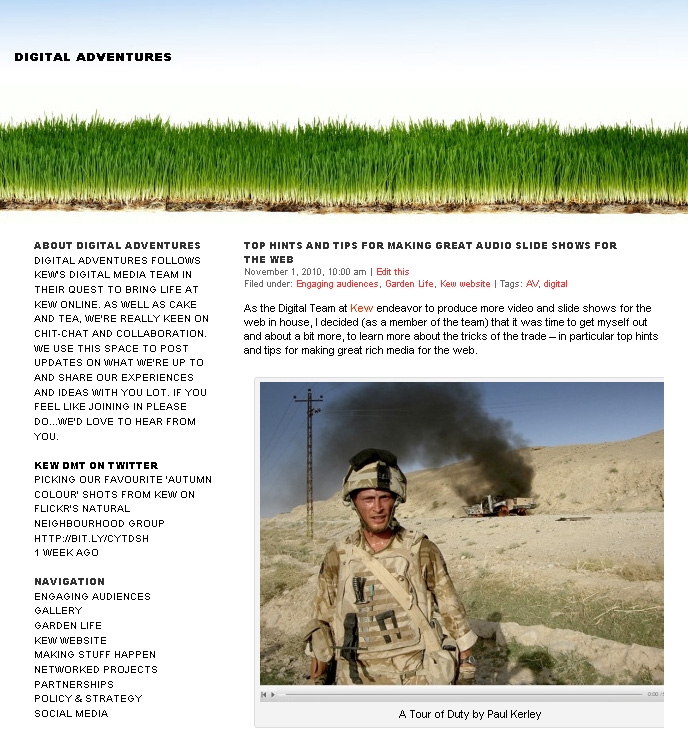
The Collections Trust has a blog called ‘OpenCulture’, dealing with issues of Digital strategy and programmes in museums, archives and libraries.

The blog, is part of OpenCulture, a multi-year joint initiative with Culture24 and the Museums, Libraries and Archives Council.

Open Culture blog

Open Culture blog

The aim of OpenCulture is to promote open and participatory approaches to cultural services and new technologies. It includes projects on a number of digital areas, including Digital Inclusion, Digital Preservation and strategies for funding effective digital content. The blog provides information about these subjects, as well as offering museums, libraries and archives an opportunity to feed into current and future activity.

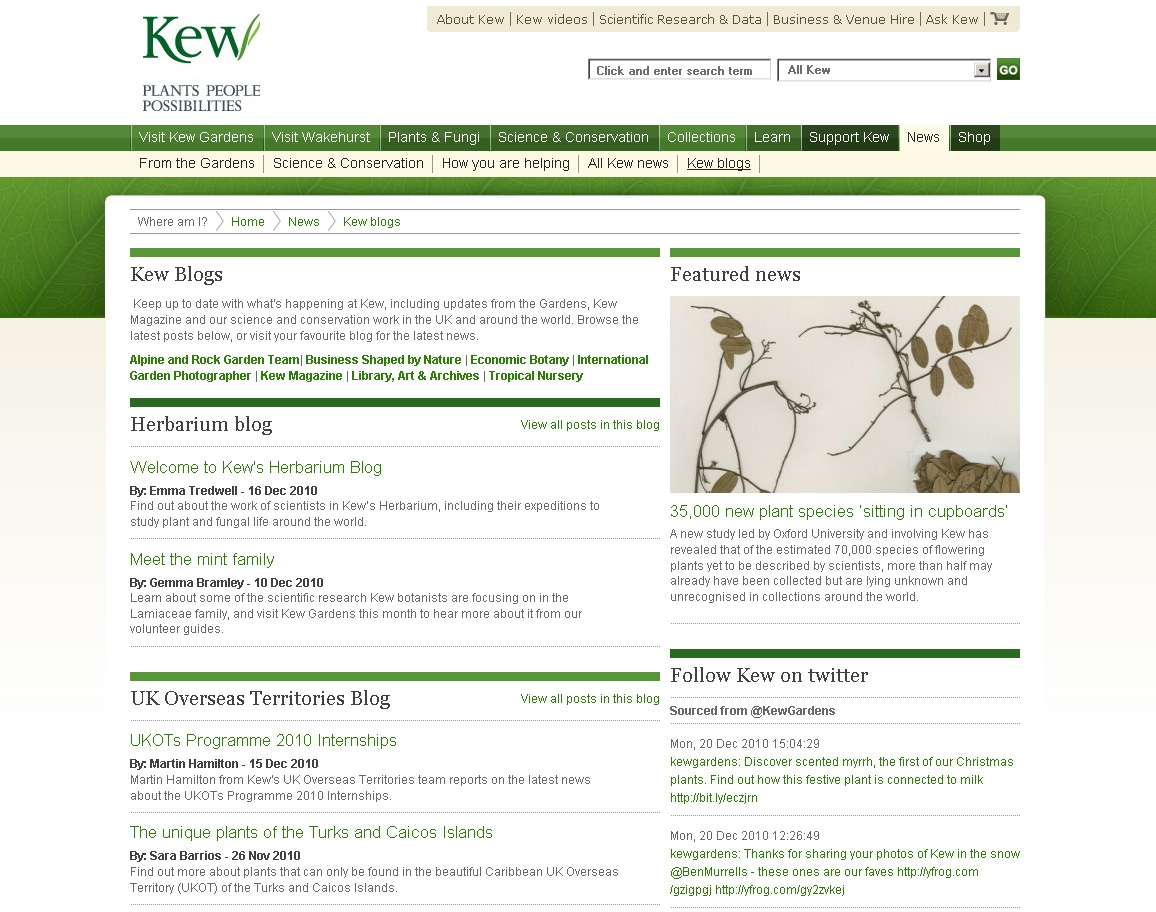
Collections Trust Web site

Collections Trust Web site

Our blogs, along with the range of other online services we provide, are an excellent way of connecting with the different audiences for our work. Not only can we provide regularly updated information, there is no better way of getting responses to policy development or programmes in realtime and directly from our user community.

Our sector is fast becoming a digital broadcaster and publisher of a huge range of content and services. As we go through this evolution, we think it is vital to capture and share as much of the new knowledge that emerges as possible. The OpenCulture blog gives us an opportunity both to capture and share knowledge in an open and dynamic way that complements online services such as Collections Link.

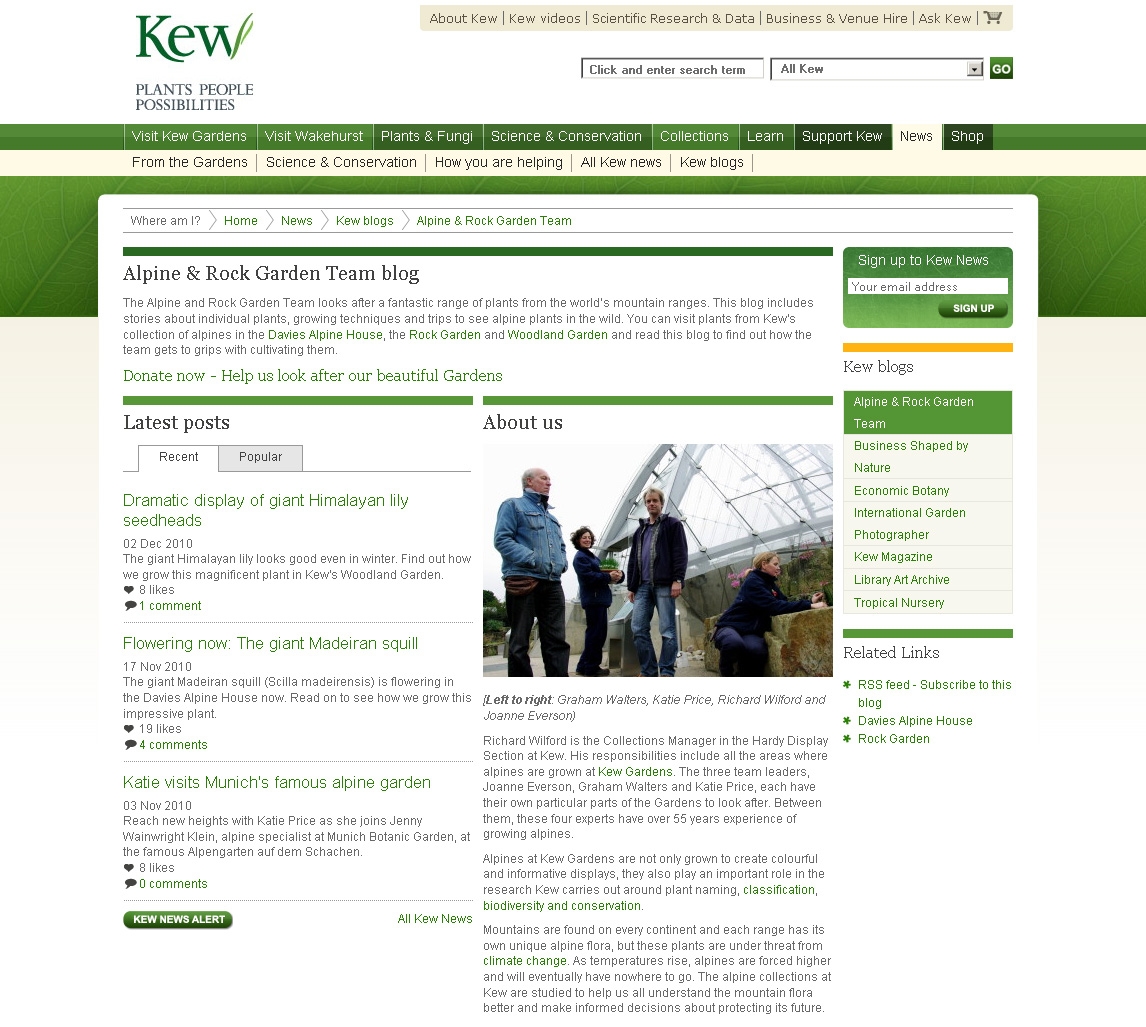
Collections Link Web site

Collections Link Web site

The OpenCulture blog is the first of a series of blogs provided by the Collections Trust. An International blog details their work on the Europeana project as well as liaison with the European Commission and information about forthcoming funding opportunities. The Collections Trust also provides updates about its work via Twitter at @collectiontrust.

Tags:
Posted in Guest-blog, Museums | No Comments »

Free workshops on Web2 and the social Web

Posted by Marieke Guy on 21st October 2009

Web 2.0 and the Social Web are terms which are now being used widely. But what do these terms mean? And what, if anything, can Web 2.0 and the Social Web offer to museums, libraries and archives, especially small organisations with limited budgets and technical expertise?

A one-day workshop sponsored by the MLA and entitled ‘An Introduction to Web 2.0 and the Social Web’ will be touring the country in the next few months. The workshop will attempt to answer the above questions. It is free to attend but places are limited. Bookings are now open so why not sign up!

More workshops in other areas will take place after New Year.

Tags:
Posted in Libraries, Museums, archives, mla-social-web-workshops | 1 Comment »

Using Google Books at Wiltshire Heritage Museum

Posted by Marieke Guy on 5th October 2009

The Wiltshire Heritage Museum library has just gone online with a full digital library created in just 5 months using the Google Books service.

The Library has been collecting books about the history, environment and archaeology of Wiltshire for over 150 years, and has many rare and important books in its collection of over 8000 volumes. Until now, the idea of getting the library online has been only a dream for librarian Dr Lorna Haycock. Without Google, it would have cost tens of thousands of pounds, buying a computer system, exhaustive data entry and only a few of the books could have been scanned electronically.

Museum Director, David Dawson explained that the controversial Google Books service has a ‘My Library’ facility, where you can simply click on a book that you have found on Google Books, and then add it to your own digital library. Work began in May this year to catalogue the entire library, using Google Books, and over 5,000 books have now been recorded. Many of them have already been digitised, and the full text of many can be searched online. He commented “as far as we know, we are the first library in the world to have created a digital library using the Google Books service. As an independent charity, we simply couldn’t afford to get our library online until Google Books gave us this fantastic opportunity to enable people to carry out their research online.

Google Books

The digital library has now been launched through the museum Web site. Everyone can now browse and search the library online – finding books that contain detailed information about where they live, or about the history of their family. Director David Dawson explains “people can then visit our library to read the real books, discovering the wealth of material that we have in our fantastic library”. As Google digitise more books, increasingly you can search every word in a book. Users can sit in their office, search the digital library and find the information they need within seconds. Sometimes they can read the book on the screen, if it has already been digitised by Google, or they can get the book from the shelf in the library. For the museum, this is the key,  researchers are already using the Google Book catalogue to find the books they need, and then coming to the library to read the book.

David Dawson will be talking in more detail about the project at a forthcoming one-day workshop facilitated by UKOLN and funded by Musuems, Libraries and Archives Council (MLA) and the South Western Federation of Museums and Art Galleries. The workshop, entitled The Social Web – An introduction to Web 2.0, will be held at Wiltshire Heritage Museum, Devizes, Wiltshire on 16th November 2009.

Tags: ,
Posted in Museums, mla-social-web-workshops, social-web-workshops | 1 Comment »

MLA Digital Agenda

Posted by Marieke Guy on 29th September 2009

The Museums, Libraries and Archives Council (MLA) have published a new set of Web pages highlighting their policy for the Digital agenda in libraries, archives and museums.

The Museums, Libraries and Archives Sector has an important role to play in using digital technologies to deliver improved access, increased information and more opportunities for participation in its rich diversity of resources and services.

MLA is committed to helping museums, libraries and archives make full use of these opportunities, and to ensuring that the sector is at the heart of government digital policies.

Our role is to provide strategic leadership to the sector in relation to the digital agenda through:

  • Developing a vision for the sector’s use of digital technologies
  • Supporting and promoting the development of quality standards
  • Encouraging innovation to enable inclusion of all communities
  • Promoting understanding and skills development

MLA has commissioned digital services from a number of organisations to help to deliver:

  • More and better quality information on cultural opportunities to the public
  • A coherent portal for cultural resources for teachers and learners
  • Greater interaction with individuals and communities through use of Web 2.0 and social networking tools
  • High quality standards in the management and preservation of digital resources

UKOLN will be working with MLA on this digital agenda and an overview of the digital services commissioned is now available.

Further information on the social Web workshops we will be running is also now available. More information on venues and dates will follow.

Tags:
Posted in Events, Libraries, Museums, Web 2.0 | No Comments »

Beyond the silos of the LAMs

Posted by Ann Chapman on 25th August 2009

I’ll be taking part in this CILIP/OCLC Executive Briefing Day on 15th September 2009 at CILIP HQ, London, alongside Roy Clare of MLA and Nick Poole of Collections Trust as part of the roundtable panel. So what’s this event all about?

Libraries, Archives and Museums (LAMs) all collect, manage and share information and materials. By integrating and working together, their users can access dispersed materials from within a single search environment. This one-day event will look at what makes LAM collaborations work and consider the potential for future joint ventures. The programme will feature presentations on the OCLC Research and RLG Partnership workshop series and case studies demonstrating varying forms of collaboration, followed by a panel roundtable and discussion forum. Speakers come from diverse organizations, including the Smithsonian Institution; V&A; University of Calgary; Libraries and Heritage, City of York Council; MLA; UKOLN; Collections Trust; University of Aberdeen, JISC and Culture24.

Places are still available and the full programme, speaker profiles and online booking are available at www.cilip.org.uk/lams.

Posted in Libraries, Museums | No Comments »

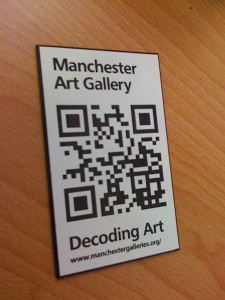
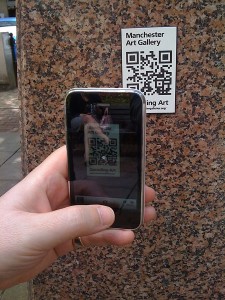
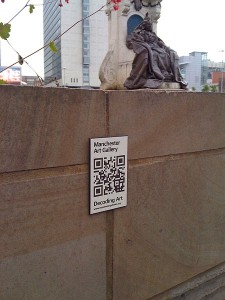
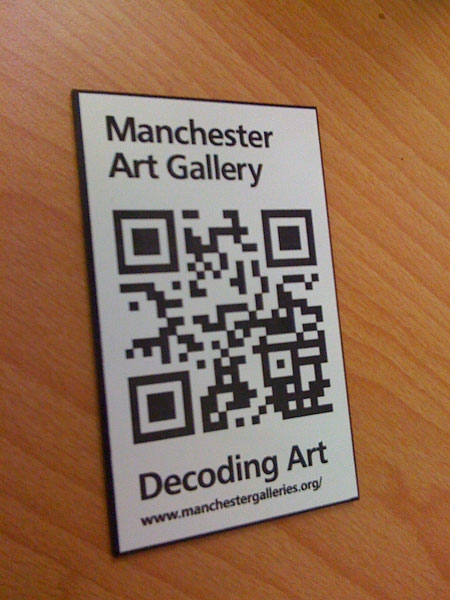
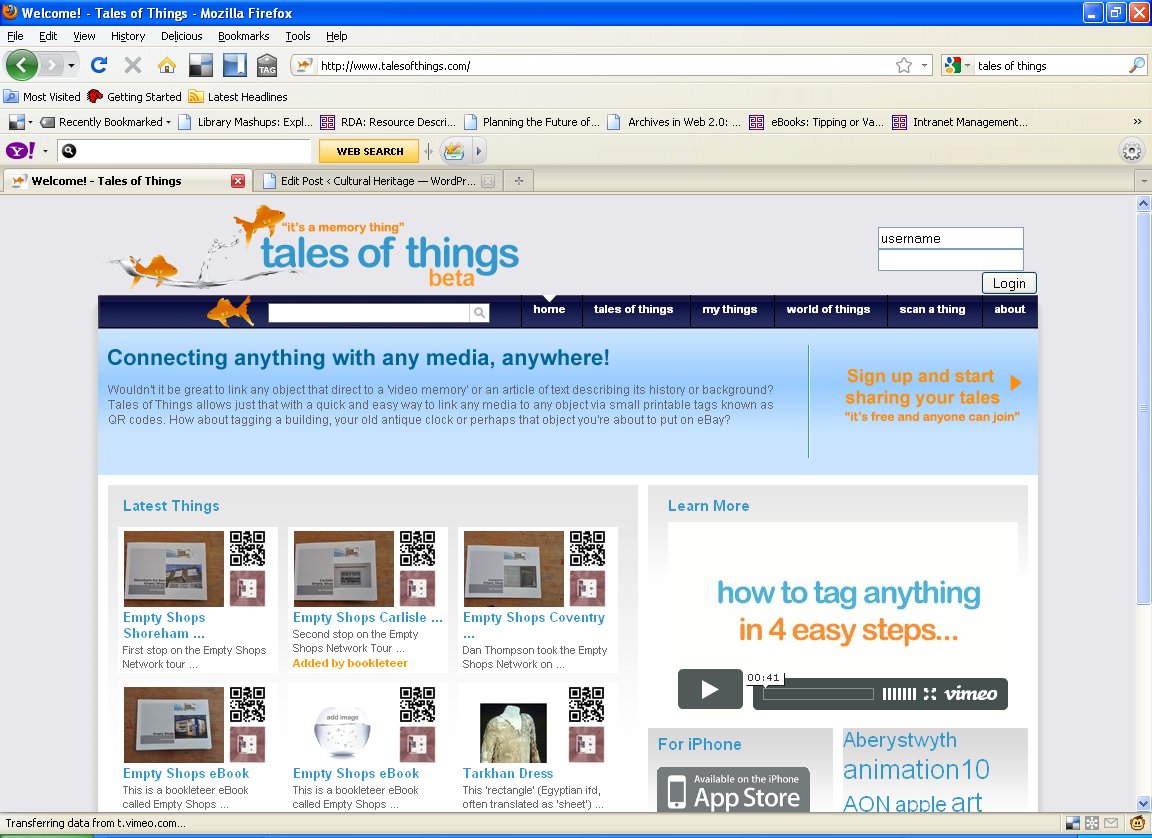
Using QR Codes in Libraries and Museums

Posted by Ann Chapman on 15th July 2009

First things first – just what are QR codes?

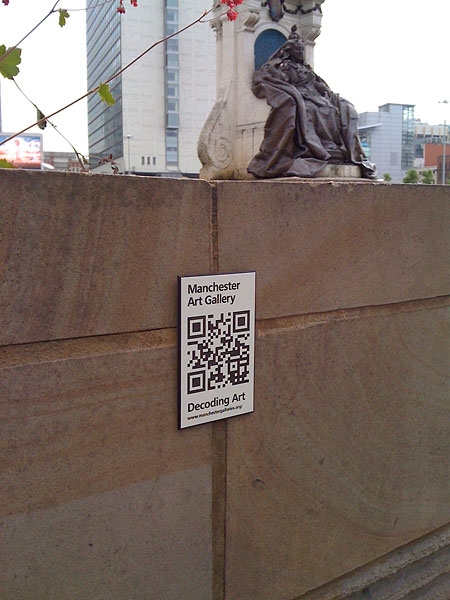
Wikipedia defines a QR Code as: “a matrix code (or two-dimensional bar code) created by Japanese corporation Denso-Wave in 1994. The “QR” is derived from “Quick Response”, as the creator intended the code to allow its contents to be decoded at high speed.” The QR Codes can be read by some mobile phones with a camera or in Seb Chan’s wordsQR codes are probably best seen just as mobile-readable URLs“.

So how might QR codes be used in cultural heritage services? I’ve found a couple of places that are currently using these codes to help users.

The University of Bath Library is adding QR codes to the details you see in the results of a catalogue search. The code contains title, author and shelf location. Their blog post notes “I simply find the resource I want, scan the code and save it on my phone. I can then use this to find the item on the shelf. In fact, I can save this on my phone (I’d probably take a little more time and cut and paste into a mobile word document) and start to build up my own reference collection.

The Powerhouse Museum in Sydney is also trying out QR codes. In their case they’ve been trialling using the codes beside exhibits in a display to take the visitor to the catalogue entry for the item. The technical aspects are described in some detail in the post on March 5th 2009 with a follow-up post on April 8th 2009.

This follows an earlier experiment in which the QR code appeared in a festival catalogue and redirected readers to a ‘hidden’ web page which gave access to a discount voucher for the festival and free entry to the museum during the event. Further posts on October 16th 2008 and October 23rd 2008 reviewed the experiment and discussed some issues that arose.

Has anyone reading this tried using QR codes? It would be good to know if anyone else has experimented with using these codes and for what for what purpose, and how successful you think it’s been.

Tags:
Posted in Cataloguing, Libraries, Museums | No Comments »

The Confusion of Digital Copycats

Posted by Marieke Guy on 5th June 2009

SABIP (the Strategic Advisory Board for Intellectual Property Policy) has just released its commissioned report Copycats? Digital consumers in the online age (PDF format). The report, undertaken by UCL’s Centre for Information Behaviour and the Evaluation of Research (CIBER), is a hefty 81 page document that offers some amazing insights into the many paradoxes of digital copyright and consumerism.

The backdrop to the research indicates that “at least seven million British citizens have downloaded unauthorised content, many on a regular basis, and many also without ethical consideration“. In monetary terms this is seen as around 8% of British GDP, a truly shocking figure.

The introduction to the report is set very much in our current times and placed in a period (January – May 2009) during which the Digital Britain report was published indicating the intention to bring broadband Internet access to every home (no doubt increasing the ability to download illegal material). Yet also suggesting consideration of the creation of a Rights Agency and the passing of anti-file sharing legislation. During the same period high-profile legal action was taken against the Pirate Bay Web site and a new law was passed in Sweden allowing copyright holders to force ISPs to reveal details of those sharing files. Alongside these activities and Open Rights Group claimed that rigid copyright was stifling innovation and hurting citizens.

The key CIBER findings were that:

  • The scale of the `problem’ is huge and growing
  • There are myriad choices when consuming content and consumers are confused
    about what is legal and not legal
  • Attitudes and behaviours towards property in the online and physical worlds are very
    different
  • It has never, ever been easier to break the law
  • There are fewer cues to guide behaviour in the online world
  • Education isn’t working, yet
  • There is a powerful idea that there is “no victim”, and so “no crime”
  • Internet service providers and the consumer electronics industry: two elephants in the
    room

It seems that there are now two cultures: the digital one and the physical. They have evolved differently (despite not always being the case digital is often seen as free while physical has a cost) and now need to be analysed and dealt with in completely different ways. Seven million downloading unauthorised comment means seven million criminals, a situation that is ridiculous and unworkable.

The report recommends many future areas for research. For example to date almost all research on file sharing has been carried out on young people and students, research should be opened out to cover the four demographics used in recent research into digital convergence. These are: ‘kids’ (teenagers); the ‘tech vanguard’, (those with high ‘self efficacy’ who are early to adopt new technologies); the ‘mainstream’ (adults); and ‘laggards’ (those who do not yet have internet access, or certainly do not engage with e-commerce).

The report also suggests “It would also be possible to undertake a parallel (or alternative) study based on British Library users or site visitors, as this would help to inform policy in terms of the academy, the library and their relationship to intellectual property.

The SABIP report has a huge amount in it and is essential reading for those dealing with copyright issues. Lets hope its pragmatic approach sparks some sort of turning point in the copyright chaos that currently exists.

The fundamental question is not how or why the downloading, copying and dissemination of unauthorised content takes place (this report seeks to answer those questions) but who does it, (and therefore, who doesn’t), and can this behaviour be changed? And if it cannot be ‘changed’ what does need to change: the law, the business models, or the relationship between the creative industries and the public domain?

Whether current copyright law is correct or not seems to be out of scope for the report. Glyn Moody argues in his blog post Why the “Copycats?” Report has a Copycat Problem that “one reason why people have few qualms about downloading copyrighted material – that lack of “ethical consideration” the report refers to above – is that there is growing realisation that copyright law as currently construed is totally tilted in favour of businesses“. Glyn provides some interesting figures that demonstrate that this is the case.

It seems the copyright war is one that will continue to be fought with fervent supporters for both sides. This report does not provide an answer to that fight but it does illustrate that while the problem is not realistically addressed casualties are inevitable.

Tags: ,
Posted in Libraries, Museums, copyright | 2 Comments »

Culturemondo International Roundtables

Posted by Ann Chapman on 15th May 2009

Checking out broken links is a routine task in maintaining a Web site. This can be frustrating when, despite concentrated searching, the target site or resource seems to have vanished into thin air. However, it can also be a voyage of discovery leading to other interesting and useful resources. This was the case the other day when I was checking out a link to Culturemondo.

Culturemondo is a network of people who are all working running, managing, building or editing cultural portals around the world. It is open and free to anyone working in this area to join, from anywhere in the world. An annual Culturemondo International Roundtable is held at a different venue each year and the 4th Roundtable was held in Taiwan in December 2008 with 37 participants from 21 countries.

Apart from finding the Culturemondo site, I also discovered the Culturemondo group page on NetVibes and blog postings on the event by Jane Finnis of Culture24 and by Seb Chan of the Sydney Powerhouse Museum on his Fresh + New(er) blog.

So next time you have to check a broken link, try thinking of it as an opportunity and not just a chore. You never know what you might find.

Posted in Museums | No Comments »

APIs and the Cultural Heritage Sector

Posted by Marieke Guy on 8th May 2009

Background

API stands for ‘application programming interface’ and is the interface that a computer system, library or application provides in order to allow requests for service to be made of it by other computer programs, and/or to allow data to be exchanged between them. A Web API is the Web version of this interface. It comprises of documented code and is effectively a way to plug one Web site or Web service into another.

Recently many Web sites have exposed APIs and made them available to external developers. The term Open API is often used to describe the technologies that allow this interaction.

Why?

There are many potential benefits of provision of APIs. The key one is that others will reuse your data and possibly create mash-ups with it. This in turn means your data will reach a much wider audience. As it would be tricky to find a cultural heritage institution that didn’t have reaching wider audiences listed on its wish list, providing APIs makes a lot of sense.

So What’s Happening in the Cultural Heritage Sector?

Recently there has been a lot of API activity in the museums sector with many big museums like the Science Museum (London, UK), the Powerhouse Museum (Sydney, Australia) and the Brooklyn Museum (New York, US) releasing their APIs.

Libraries have long been at the forefront when it comes to mashing up data. From John Udell’s library look up tool, to the days of the Talis Mashed up Library competition and on to the Mashed Library events, held last year on the 27th November 2008 at Birkbeck College, London and taking place later this year at the University of Huddersfield. (There is an article written by Paul Miller entitled What Happens When We Mash The Library? on earlier activities.) Many libraries have released APIs and a useful list of library-related APIs is available from the Mashed Library Web site.

How do we Start?

There is a now a lot of literature available on writing APIs, releasing APIs and supporting them. One useful place to start might be UKOLN’s recently released Introbyte document: An Introduction To APIs.

API developers and users may find the deliverables of the UKOLN Good APIs project useful. The Good APIs project has recently been carried out to look at what makes a good API. Although the project focussed on activity in the UK Higher Education arena many of the results and outcomes are transferable to the cultural heritage sector. One such outcome is the list of good practice techniques for API creation and consumption. The techniques are currently open for comments.

Posted in Libraries, Museums, Web 2.0 | 1 Comment »