
Web 2.0 or Not Web 2.0? Using Ancestry in Museums
Posted by guestblogger on September 13th, 2010
About this Guest Post
Patricia Collins is a curator based in Norfolk working on a freelance basis for museums in the independent sector. She can be contacted at rattlerow@phonecoop.coop
Web 2.0 or Not Web 2.0? – Using Ancestry in Museums
Reading Brian Kelly’s recent AIM research paper prompted me to post this about ancestry.co.uk.
Ancestry is the market leader in on-line family history. Users can not only research their family trees by accessing databases of census details, parish registers, military record cards and the like, but they can also upload their own trees and make them available to other researchers. Hence the site fosters collaborative working and information sharing; both key components of Web 2.0 technologies. However it is a subscription-only facility whereas Web 2.0 technologies are freely available.
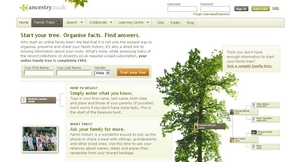
Screenshot of Ancestry.co.uk Web site
What, to my mind, makes ancestry different is that public libraries across the country are subscribers so that anyone with a library ticket can access it and public libraries are (still) always free. This means the user group is huge, non-exclusive and, because the organisation has partners across the world, international.
Web 2.0 or Not Web 2.0, I’ve been using ancestry to create genealogies for people associated with local museums. Museums often have displays, objects and research files relating to the ‘great and good’ of their communities. I put up trees for local heroes such as an archaeologist and a naval commander and all their servants with links to objects and documents in museum and archive collections. When other ancestry genealogists began to interact with the trees, the research went well beyond county or country borders and further back in time than the information held in the local museum.
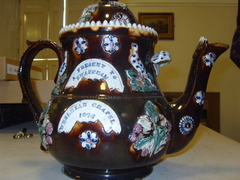
From Ancestry - Wesleyan tea pot from Robert Robinson archive
An example is ancestry.co.uk Swaffham People – Rev Edmund Outram. Mr Outram was a curate in Swaffham in the 1930s. He had a passion for photography and created a magic lantern slideshow of the town and its inhabitants which he then showed in the local Assembly Rooms. The magic lantern slides became part of the local museum collection. Having put information about Mr Outram and some of his images onto ancestry, I heard from Sussex genealogists that he had made similar slideshows there. From Leicestershire, I received images of graffitti made by Outram’s great grandfather in a church bell tower. We discovered his original magic lantern in West Sussex County archives, his father’s collection of weather records in a Cambridge University collection and encountered someone who had been married by him. This created a far richer portrait of the man and greater understanding of his legacy than we could ever hope to achieve alone in Norfolk. A digital research community had been created.
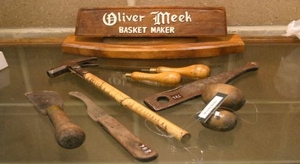
Photo from Ancestry - Oliver Meek basket making tools
My task then became that of site moderator adding the information from ancestry researchers to the Norfolk trees as appropriate. Museums often describe themselves as beseiged by enquiries from family historians and are not always best placed to answer them.
Enquiries can be time consuming and rarely generate any income for the museum. Using ancestry has met some of the industry targets – widened museum user and advocate groups, increased local knowledge and made collections available to a far wider audience. As the digital research communities grow, they take on more of the enquiries thereby taking the weight off museum staff. The enquiries that do come into the museum are often from those wishing to make a visit in person.
Small museums often relate solely to the local geographical community of residents and visitors to a town. By focussing on local great and good on ancestry, museums have engaged many different communities of interest – naval historians, collectors of ceramics, family genealogists and who knows what the next posting will bring.
I would be very happy to hear from others in museums or libraries who are also using ancestry.
September 13th, 2010 at 7:52 pm
[...] This post was mentioned on Twitter by Edwords, UKOLN MLA Support. UKOLN MLA Support said: Web 2.0 or Not Web 2.0? Using Ancestry in Museums: About this Guest Post Patricia Collins is a curator based in No… http://bit.ly/9gZp7d [...]